
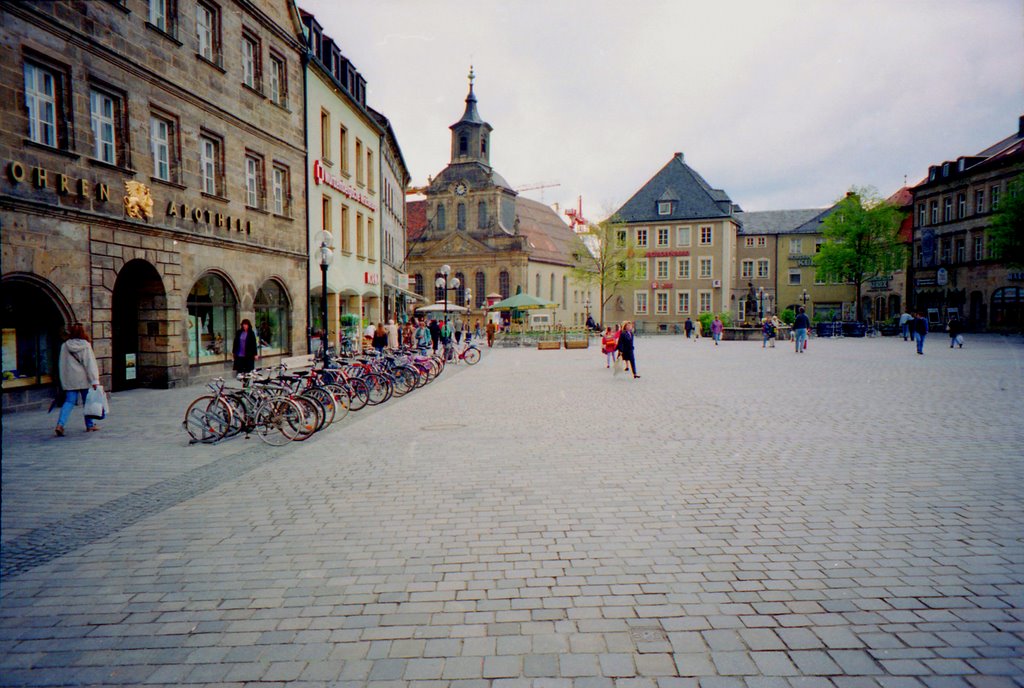
Bayreuth is a city most visitors associate with one name: Richard Wagner.
But to understand Bayreuth beyond its opera house and festival culture, it is worth following another trail — one that leads through breweries, Franconian taverns, contemporary restaurants and the rituals of local food.
The city’s culinary identity is rooted in Franconia, but it is no longer confined to traditional cuisine. Bayreuth’s restaurants increasingly combine regional ingredients with international influences, creating a food scene that reflects the city’s changing identity. (Bayreuth)
The Franconian Table
Franconian cuisine is not designed to be delicate for the sake of delicacy.
It is regional food with a strong sense of place: hearty, seasonal, closely connected to agriculture, meat, potatoes, bread, beer and the traditions of the surrounding countryside.
The experience is as much about atmosphere as ingredients.
A traditional Wirtshaus can tell you something about Bayreuth that a formal restaurant cannot. Wooden tables, local beer, substantial portions and recipes passed through generations are part of the region’s culinary vocabulary.
Beer as Culture
In Bayreuth, beer is not simply something to accompany dinner.
It is part of the city’s identity.
The Maisel brewery has been part of Bayreuth’s story for generations, and its brewery experience combines history, brewing culture and tasting. The historic brewery complex dates back to 1887. (Maisel)
For a visitor interested in food culture, this is particularly fascinating because beer becomes a way of understanding the region: its ingredients, craftsmanship and social rituals.
Liebesbier: Where Beer Meets Contemporary Food
One of Bayreuth’s most distinctive modern hospitality concepts is Liebesbier.
Located directly beside the Maisel brewery, the restaurant combines an industrial-brewery setting with a broad contemporary menu and an unusually extensive beer selection.
The restaurant currently lists more than 100 beers, alongside food ranging from regional-ingredient dishes and steaks to burgers, vegetarian dishes and desserts. (Liebesbier)
What makes Liebesbier particularly interesting is that it does not attempt to separate food from the brewing experience.
The brewery is visible from the restaurant.
The beer is part of the meal.
And the surrounding architecture becomes part of the story.
Oskar and the Historic City
For a different perspective, Oskar — Das Wirtshaus am Markt — occupies a historic building in the centre of Bayreuth.
The restaurant focuses on Franconian and regional cuisine, while the setting itself connects the meal to the city’s architectural history. (Bayreuth)
This is another important aspect of eating in Bayreuth: the city often places food directly inside its history.
A City Worth Tasting
Bayreuth’s culinary scene is not yet defined by the international fine-dining reputation of Munich, Berlin or Hamburg.
That is precisely what makes it interesting.
It offers something quieter: a city where brewing traditions, Franconian food, contemporary hospitality and cultural tourism coexist.
For the curious traveller, Bayreuth is best approached not as a checklist of restaurants, but as a place to taste a region.
Because sometimes the most revealing meal is not the most ambitious one.
It is the one that tells you where you are.




Leave a Reply